
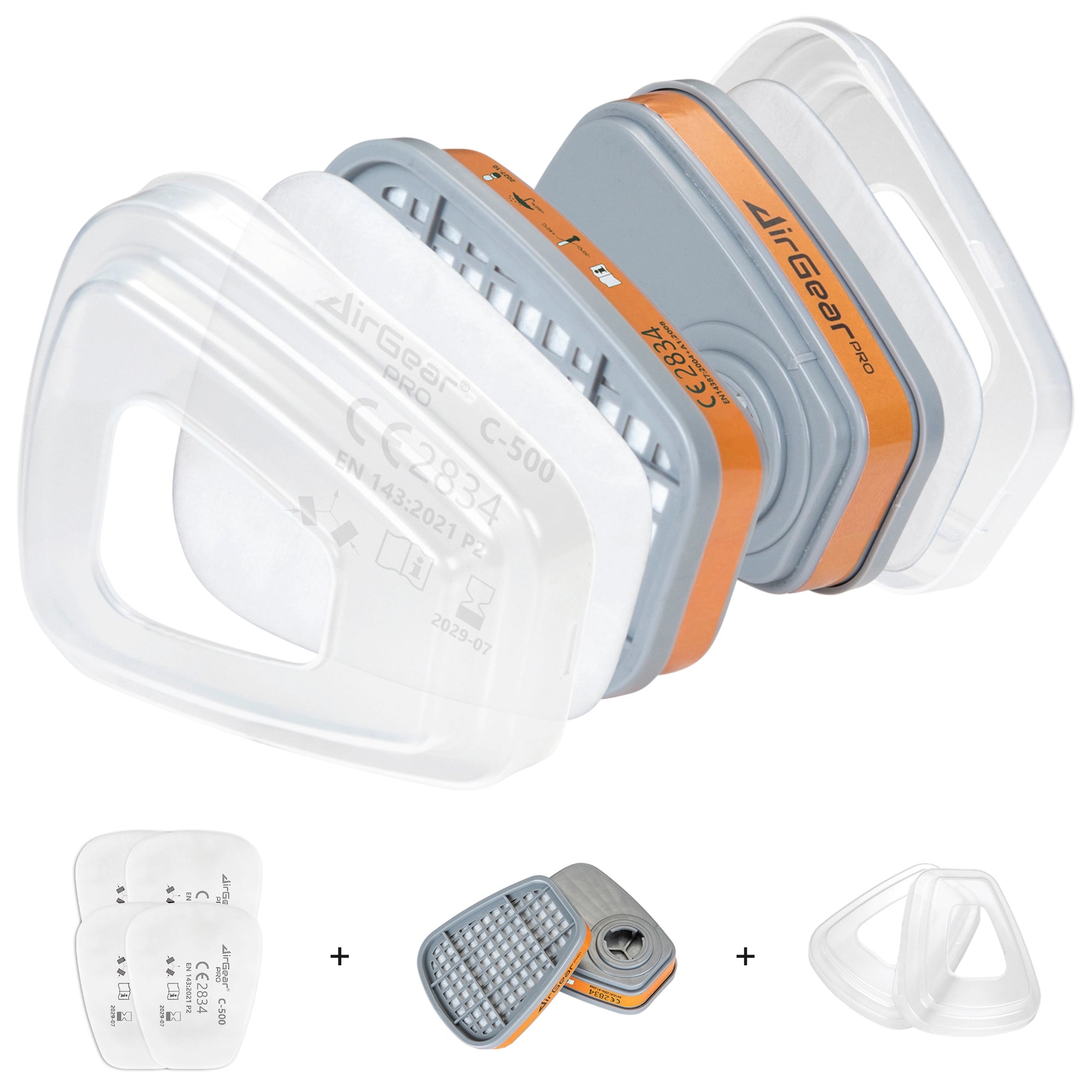


F-500 A1P2 Organic Gas & Dust Filters – For G-500, M-500 & G-750 Respirators
VERSATILE PROTECTION AT ITS FINEST: The AirGearPro F-500 Respirator mask filters are certified to ensure your protection during painting, woodworking, construction, sanding, renovation, demolition, drywall repair, wall paint spray paint, and various diy projects..
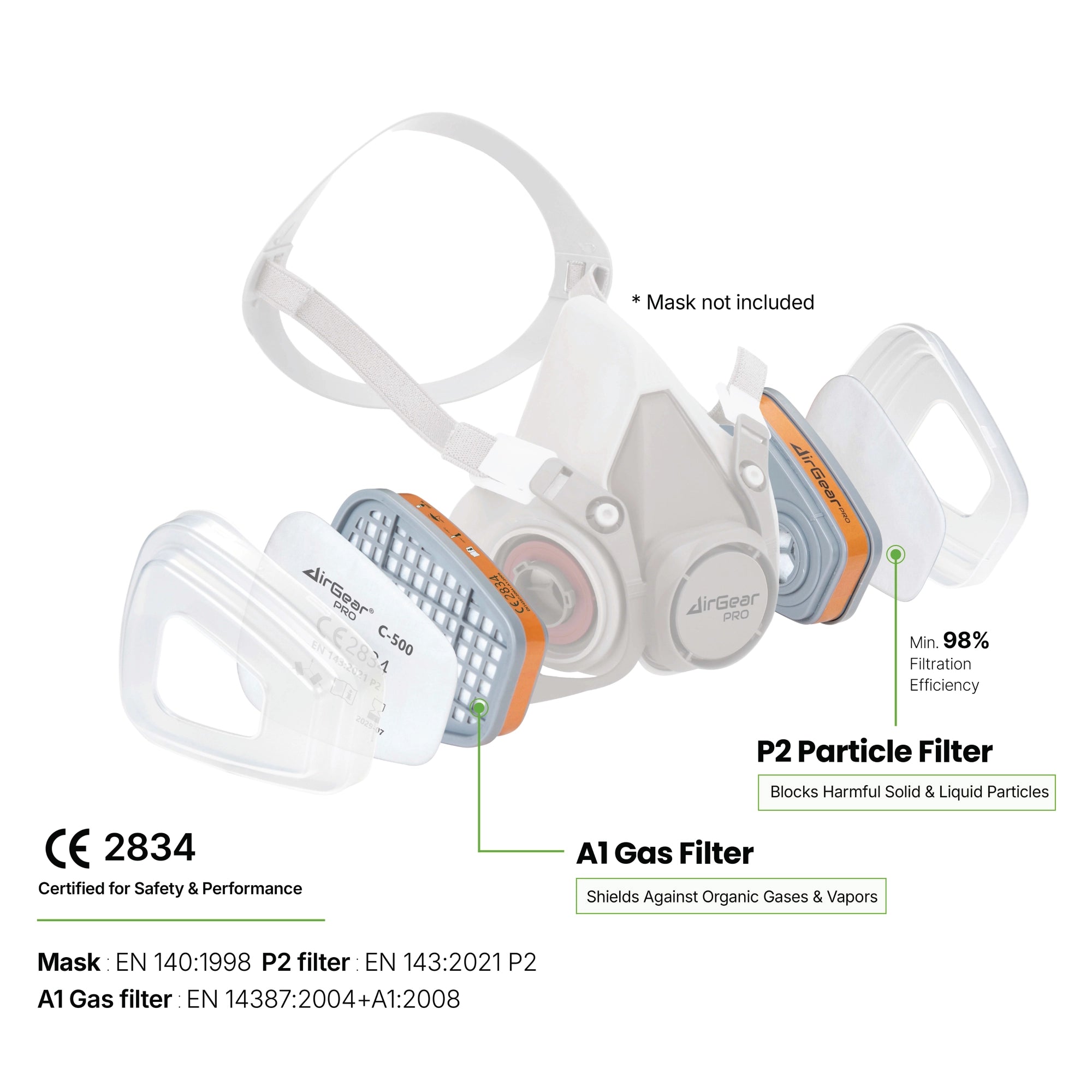
COMPATIBLE: The F-500 filter set is compatible with G-500, M-500 and G-750 respirator gas masks from AirGearPro.
DUAL FILTRATION SYSTEM (A1P2): Our F 500 filters are designed with a dual filtration system of class A1P2 activated carbon filter to guarantee your protection against gases, vapours and particles. The anti-gas cartridges filter out organic gases and vapours with boiling points above 65°C. The P2 dust filter filters at least 98% of airborne particles.
REUSABLE MASK: Our respirator mask with filter makes it possible to replace the filters when they reach the end of their life and lets you continue to use the gas mask with optimal filtration, thus reducing the impact on the environment.
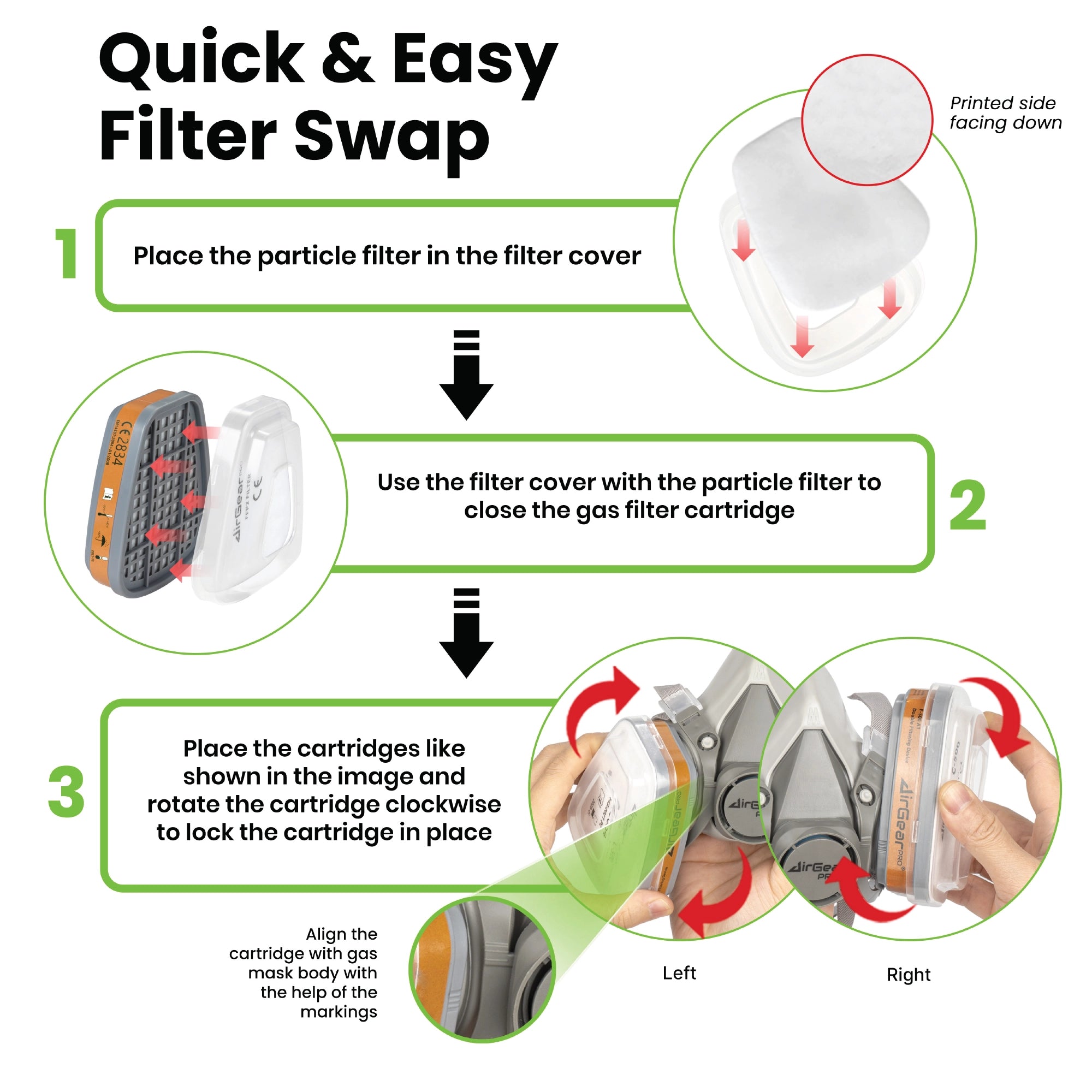
EASY TO ASSEMBLE AND USE: The user’s manual, provided in English, includes clear instructions and safety precautions for easy assembly and usage. Should you have any questions, our customer service team is readily available to assist you.
Product Highlights

Clear instructions included

90g without filters

EN 143:2000
Pairs well with
Delivered within 2-3 business days
30 Day risk-free trial
2 Year Warranty
Complimentary shipping & returns
Pairs well with
F-500 A1P2 Organic Gas & Dust Filters – For G-500, M-500 & G-750 Respirators
If you have any questions, you are always welcome to contact us. We'll get back to you as soon as possible, within 24 hours on weekdays.
-
Shipping Information
Use this text to answer questions in as much detail as possible for your customers.
-
Customer Support
Use this text to answer questions in as much detail as possible for your customers.
-
FAQ’s
Use this text to answer questions in as much detail as possible for your customers.
-
Contact Us
Use this text to answer questions in as much detail as possible for your customers.
Free shipping and returns
FAQs
Please read our FAQs page to find out more.