
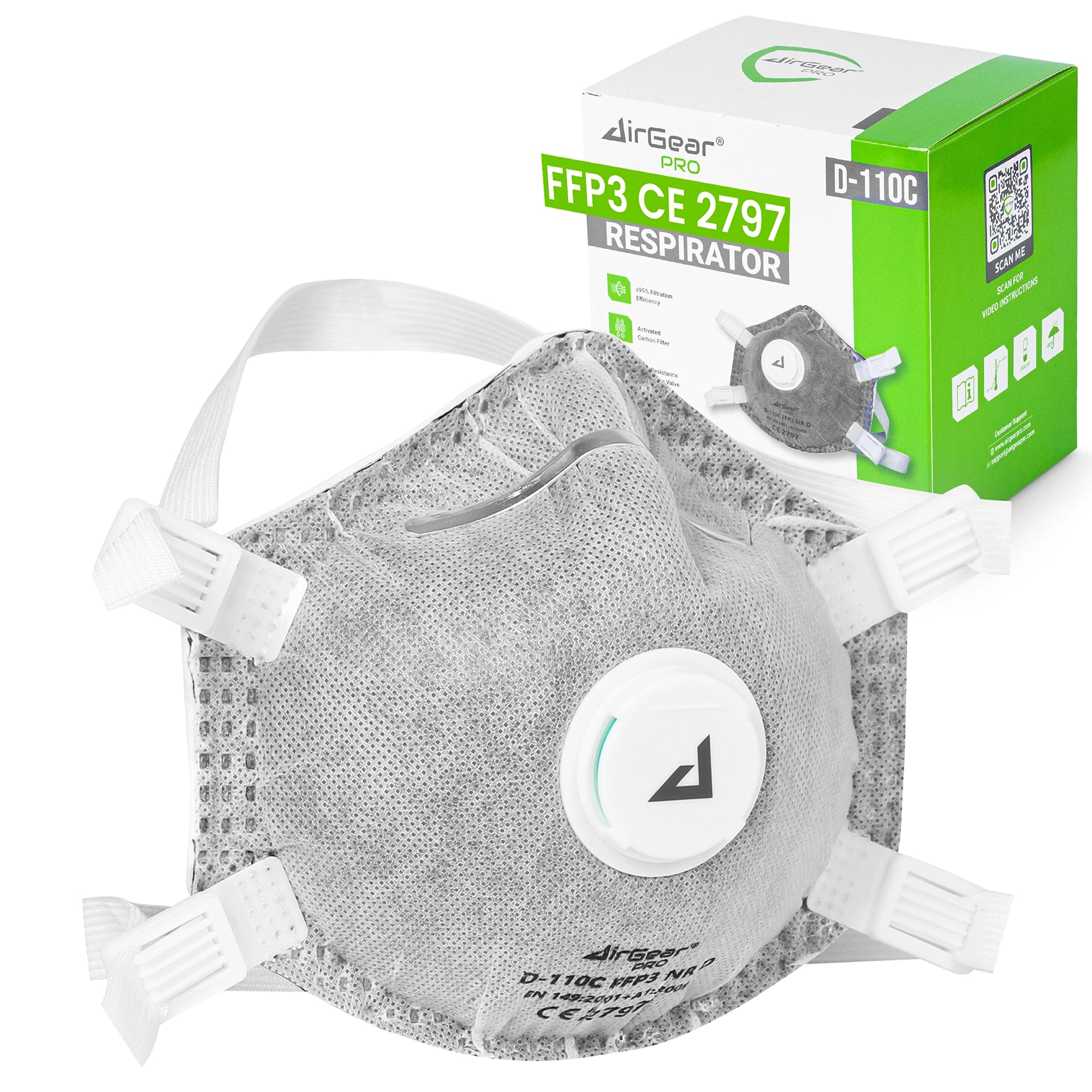




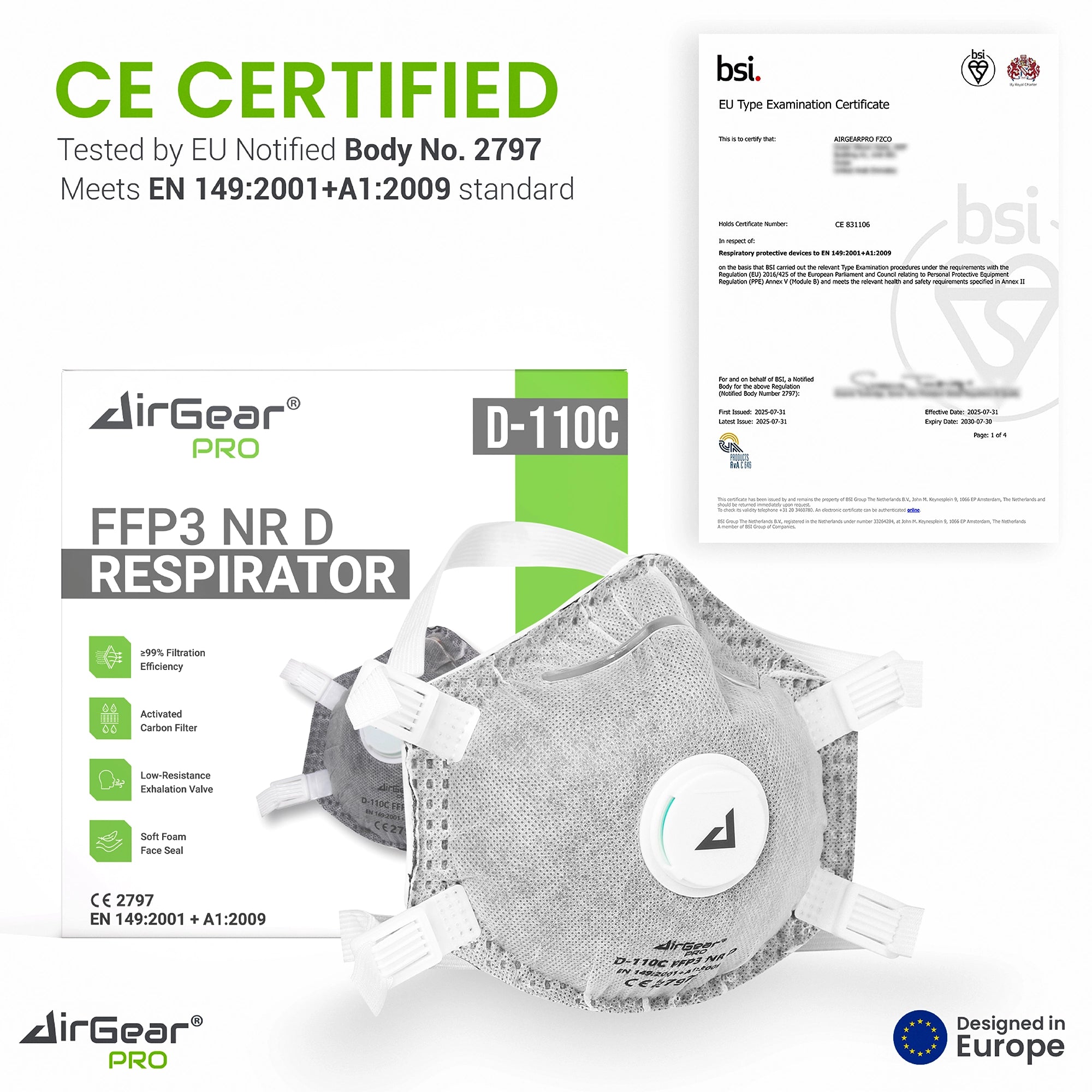


AirGearPro D110C FFP3 Disposable Respirator Mask - CE 2797 Certified, Exhalation Valve, Activated Carbon
FFP3 Respiratory Protection for Demanding Environments
CE 2797 certified. Tested to EN 149:2001 + A1:2009 with at least 99% filtration efficiency. The higher-protection FFP3 standard for fine dust, aerosols, and demanding industrial applications.
What This Mask Does
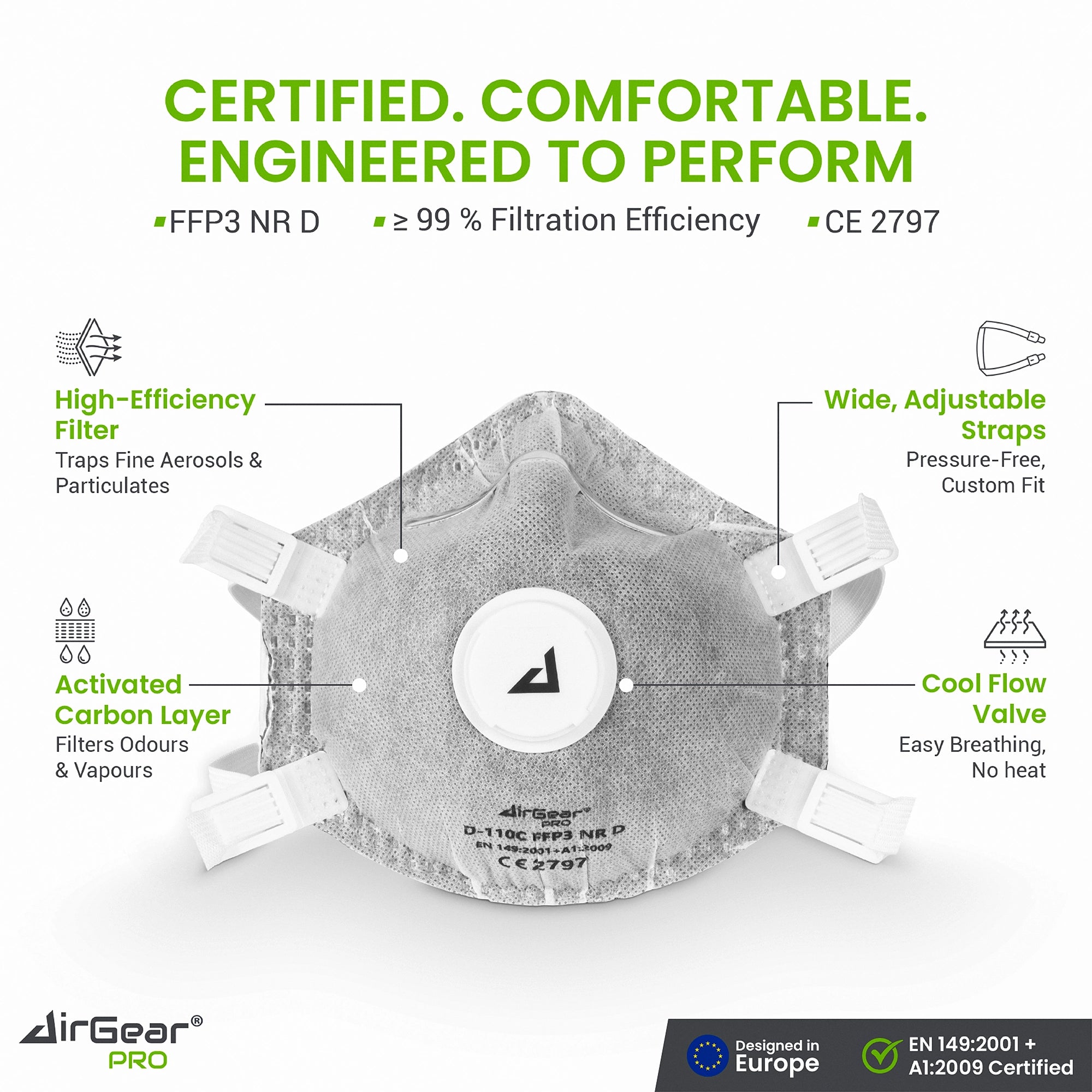
- FFP3 NR D / CE 2797 certified - meets EN 149:2001 + A1:2009 with at least 99% filtration efficiency against fine dust, aerosols, and airborne particles.
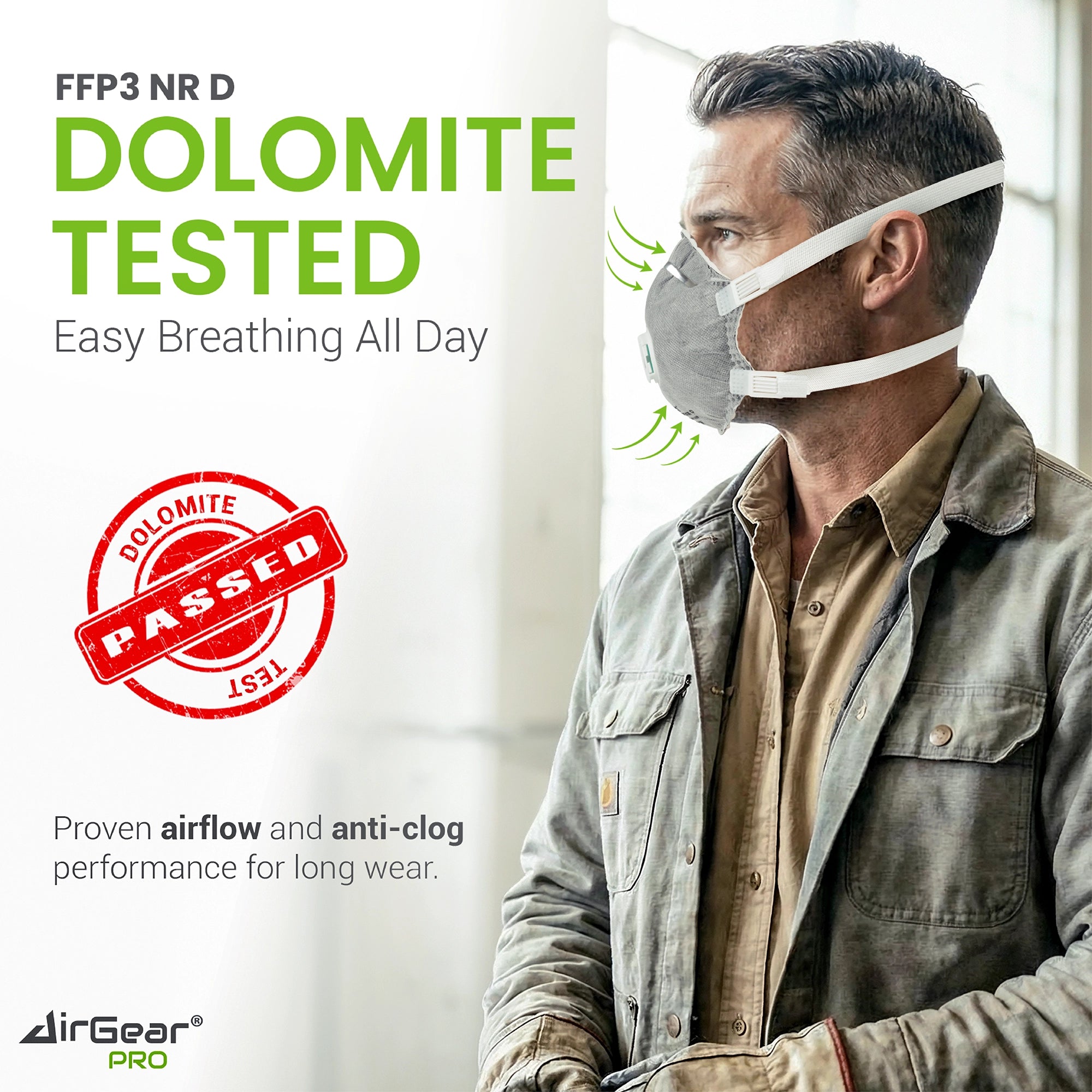
- Low-resistance exhalation valve - high-performance multi-layer system supports smoother airflow and reduces clogging. Ideal for long shifts and dust-intensive tasks.
- Reinforced aluminium nose clip and 360° memory-foam seal - minimises leaks and prevents glasses fogging during sanding, building work, and spray painting.
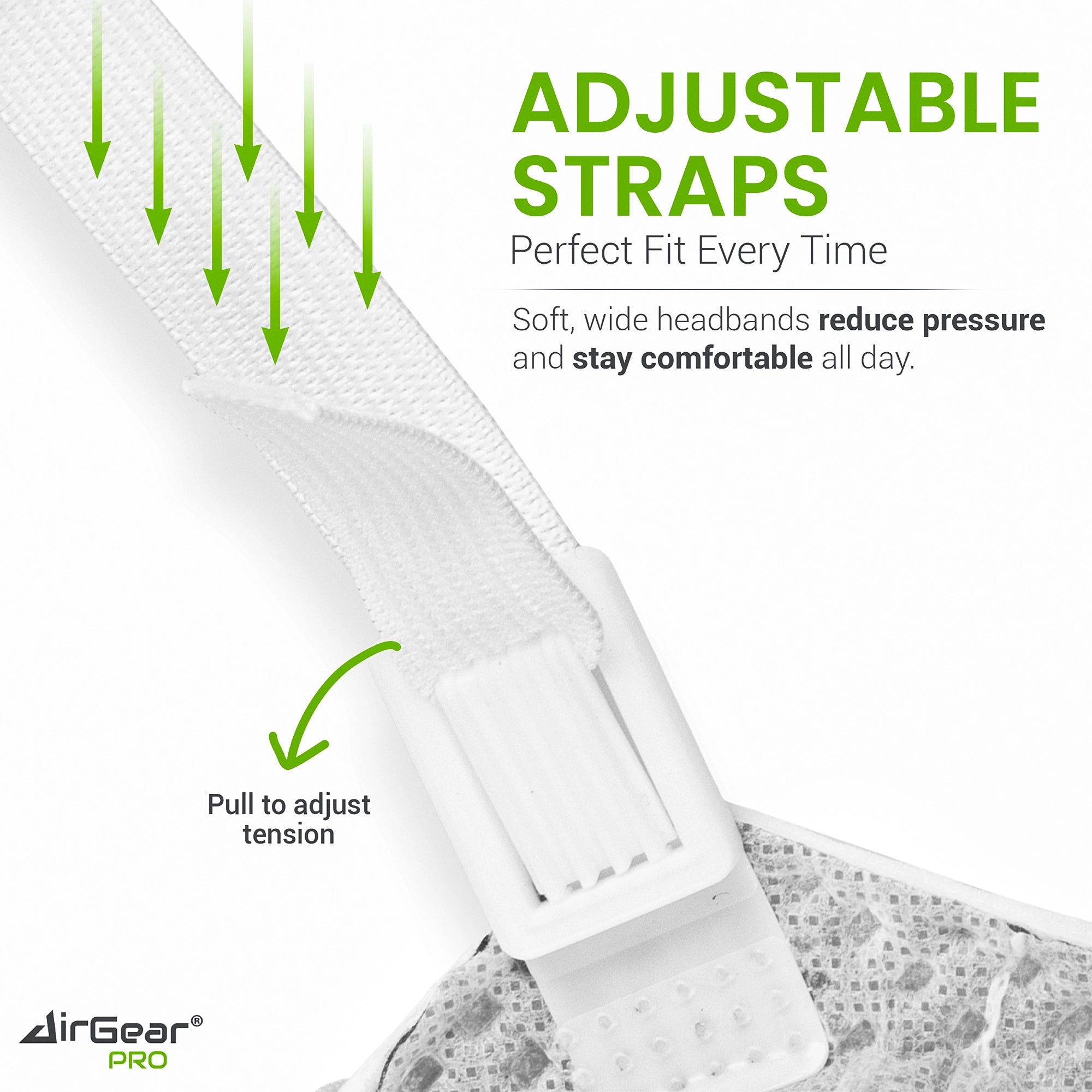
- Latex-free, adjustable headbands - soft straps distribute pressure evenly for all-day comfort.
- Activated carbon filter layer - helps reduce odours and mild fumes from workshop chemicals, paint, and mould remediation environments.
Built For
- Construction, woodworking, and building work
- Sanding and dust-intensive tasks
- Spray painting and chemical applications
- Mould remediation
- General industrial and demanding workshop use
Certification
CE 2797 · EN 149:2001 + A1:2009 (BSI Group Netherlands B.V) · FFP3 NR D
Available in Pack Sizes
5-pack, 10-pack, or 20-pack -- choose the option below based on your needs.
Product Highlights

Light Weight

EN 149:2001+A1:2009
- Pack Size:
- 5-Pack
Pairs well with
Delivered within 2-3 business days
30 Day risk-free trial
2-Year Warranty
Complimentary shipping & returns
If you have any questions, you are always welcome to contact us. We'll get back to you as soon as possible, within 24 hours on weekdays.
-
Shipping Information
Use this text to answer questions in as much detail as possible for your customers.
-
Customer Support
Use this text to answer questions in as much detail as possible for your customers.
-
FAQ’s
Use this text to answer questions in as much detail as possible for your customers.
-
Contact Us
Use this text to answer questions in as much detail as possible for your customers.
Free shipping and returns


FAQs
Please read our FAQs page to find out more.